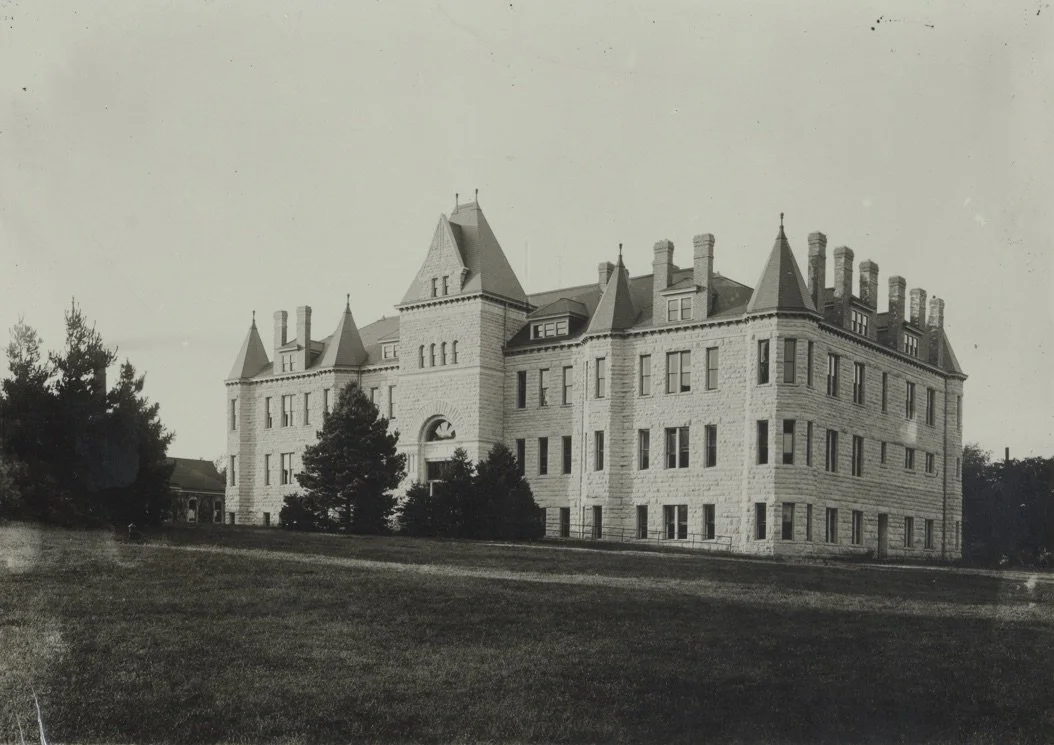
Denison Hall
1902-1934
Quick Facts:
Built: 1902
Original Intent: Physical Sciences
Destroyed: August 3, 1934 (Fire)
Names:
Physical Science Building (1902-1913)
Denison Hall (1913-1934)
Housed:
Department of Chemistry (*1902-1934)
Department of Physics - (*)
Department of Electrical Engineering (*)
Now referred to as “Old” Denison since a “New” Denison Hall was built in 1960.
Circa - 1905. Looking northwest.
Courtesy of Richard L. D. and Marjorie J. Morse Department of Archives and Special Collections, Kansas State University Libraries.
Once K-State had moved to its new location, a new chemistry building was erected in 1876. This would serve as the main chemistry building up until May 31, 1900, when it caught fire by a burner being left on overnight. It was later restored, but this fire led to the university to acquire funds to build a new building that could hold the chemistry department and be able to provide space for more Physical Science courses. This started the story of what would become Denison Hall.
Preface
With the destruction of the chemistry building, it was in immediate need for a new building to replace it. Things moved quickly to get this task accomplished
May 31, 1900, the old chemistry building burns.
April 9, 1901, the Board of Regents chose the location of the new building. Excluding the equipment of the building, it was to cost a total of $70,000 (~$2.7 Million today).
July 8, 1901, contract completed to design and construct the new building.
Main Contractor was C.A. Fellows, for a cost of $55,434 for the structure.
Heating Sytem Contractor was Gaerber Bros., for $5,676 for the system.
Added expenses for project were $8,890.
October 1, 1901, 125 tons of cement had been poured, structuring the basement of the building.
July 1, 1902, construction was to be done though reports say it completed prior to June 17, 1902. It measured around 100 x 175ft.
1901-1903
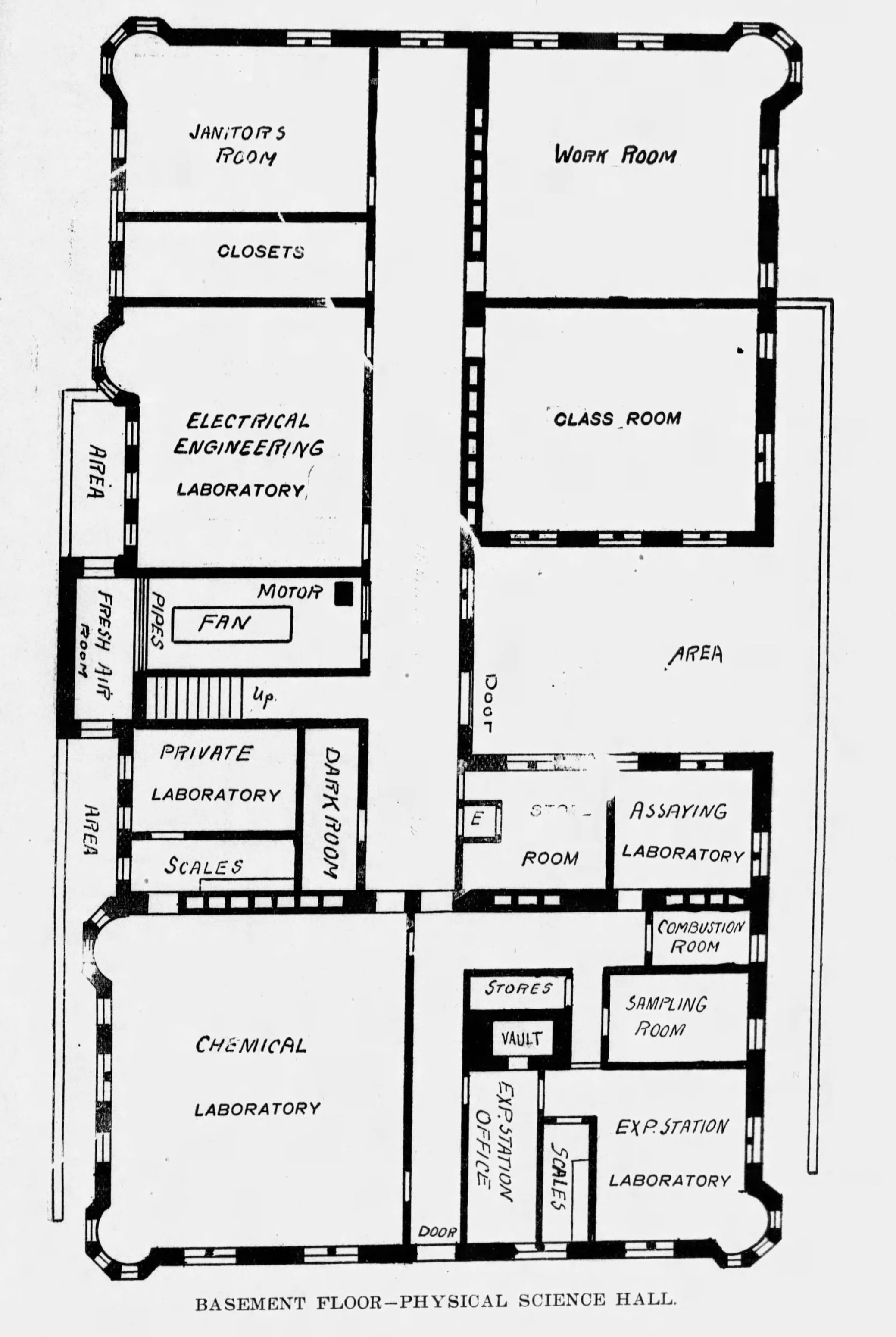
Basement floor-plan of building. Industrialist, June 17, 1902
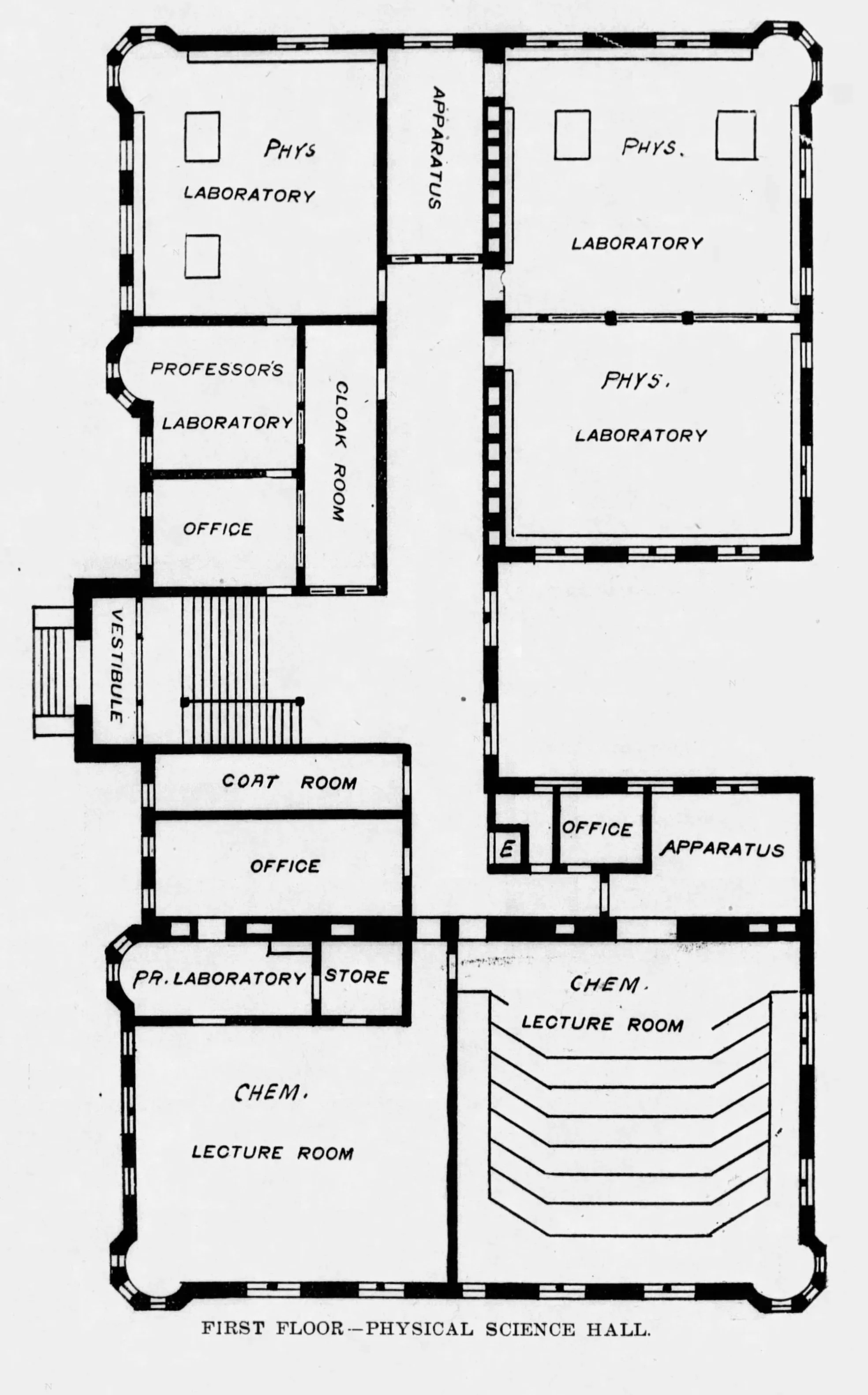
First Floor, floor-plan of building. Industrialist, June 17, 1902
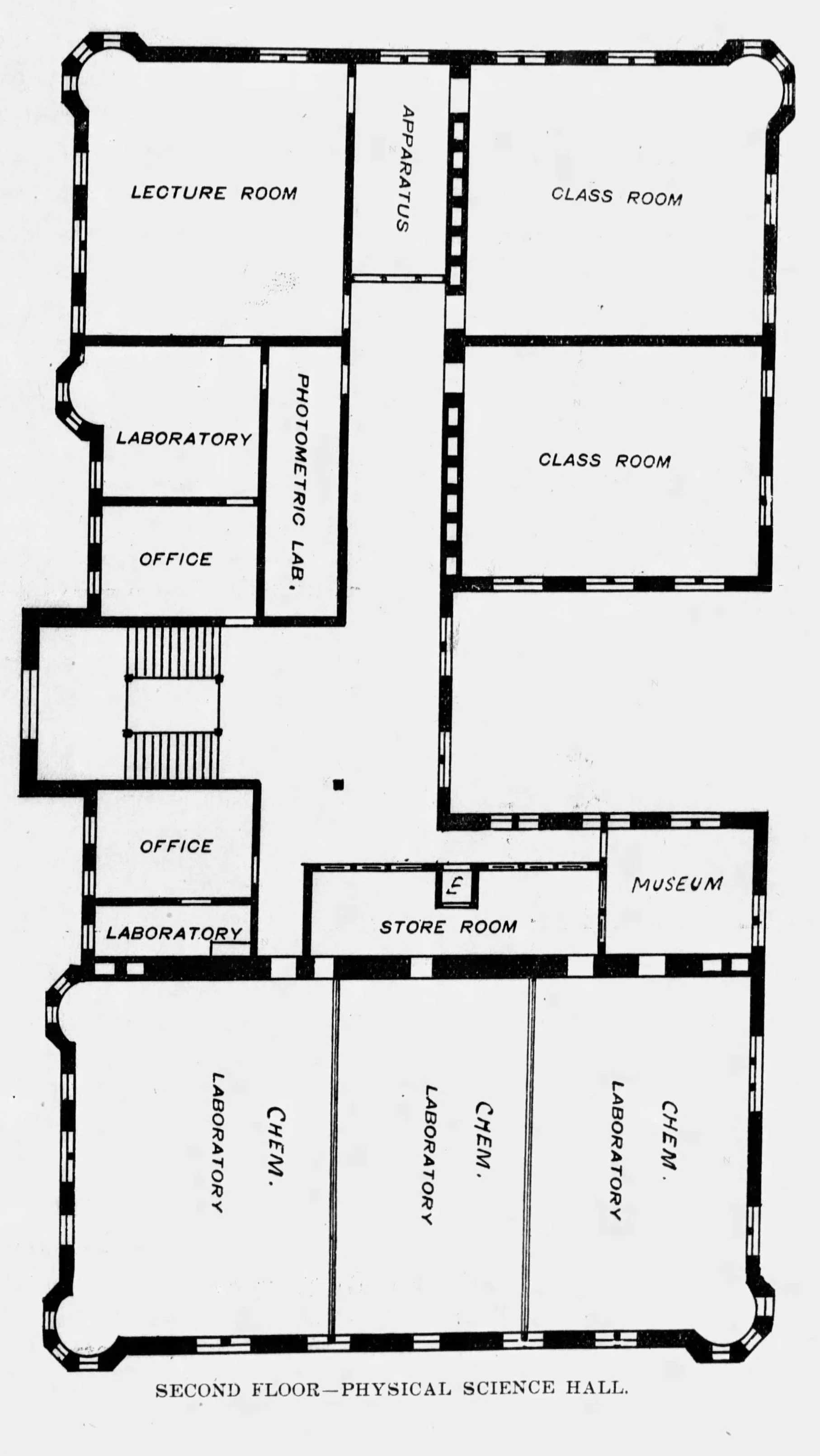
Second Floor, floor-plan of building. Industrialist, June 17, 1902
The building was said to have been a masterpiece, model college building, and best/most economical building of its stature in the U.S.
The exterior was stated to have had a “naturalness and ruggedness" that defined its overall beauty. The roof gleamed with slate tiles and copper guttering, adding to aesthetic of the building. The entire structure had two stories, basement, subbasement, and an attic. Throughout the entire building, all the room were large and spacious, well lit, and with wide hallways and stairways that allowed for easy access and mobility throughout.
The largest room in the building, the Chemistry Lecture Room, was said to be able to hold over 100 students, possibly being one of the largest room occupancy’s at the University at that point. This sat on the first floor of the building. One east side of the second floor, the three Chemical Laboratories were separated by light glass partitions, that could raised to create one large room. The attic, though unfinished in 1902, was partitioned and plastered to hold a meteorological office, Experiment Station mailroom, and a storage room. One of the last rooms that garnered lots of attention was that of the fire-proof vault within the basement. This would allow a safe space to hold valuable records and apparatuses, which proved to be handy.
With the top-of-the-line classrooms came state-of-the-art utilities that many buildings on campus had yet to dream of. Extensive water sources throughout, electrical power and lights, several bathrooms, and even an elevator to lift objects up and down the building. Furthermore, with being a place of high use of poisonous material and gases, a strong ventilation system was implemented, that would pump air from a central fan system all across the building. With this system, rooms were able to control how much air flow and heat was pumped through. To quote the exact use from the June 17, 1902 "Industrialist”, “[t]he air passes into this fan from the cold-air chamber, and having been heated to any desirable temperature by being forced through a battery of steam pipes, the fan forces the warm air under the floor of the basement into the air-tight space called plenum, from whence it ascend the flues of the heavy division walls into different class rooms, laboratories, and offices. A single mechanism in each flue regulates the rapidity, i.e., the quantity of the flow.” Upon exit of the building, there were over 20 chimneys that helped the air escape.
Denison Hall circa 1905. Looking northwest. Courtesy of Richard L. D. and Marjorie J. Morse Department of Archives and Special Collections, Kansas State University Libraries.
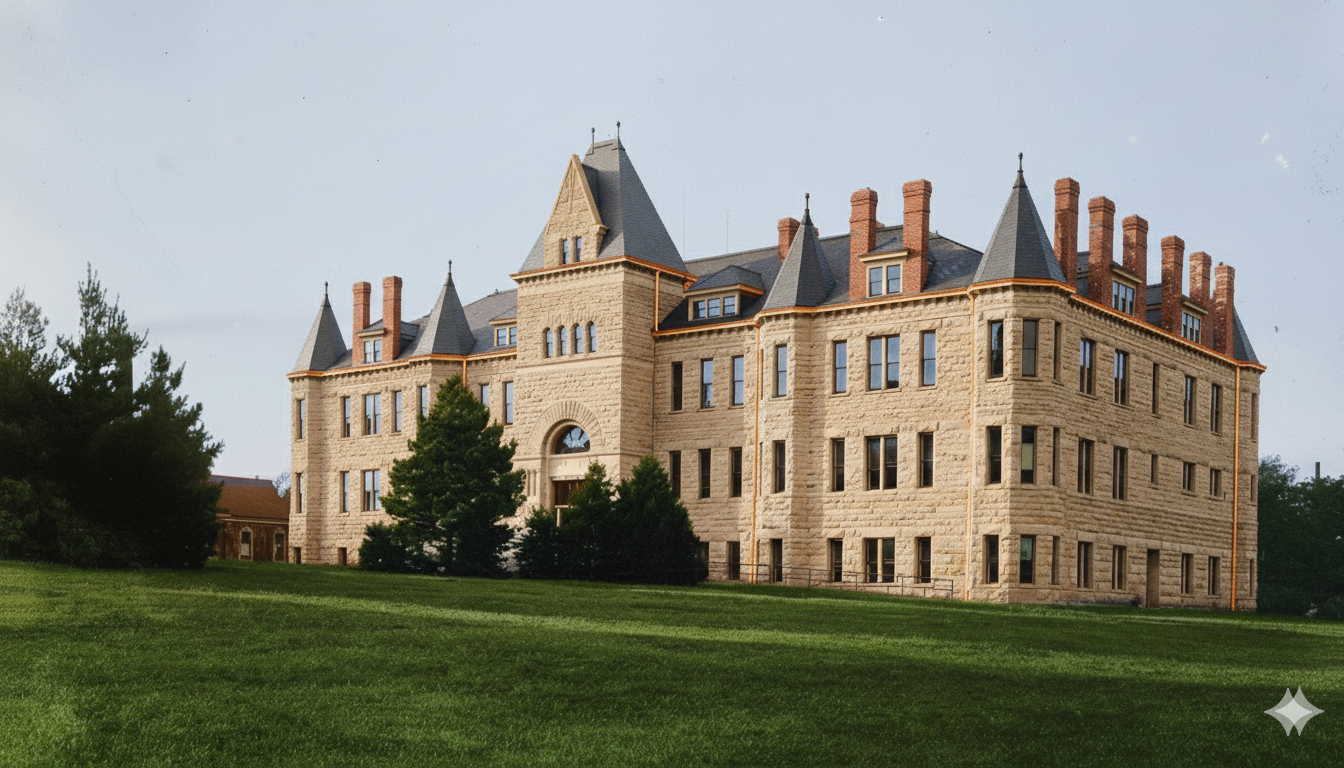
Denison Hall circa 1905. Looking northwest. Courtesy of Richard L. D. and Marjorie J. Morse Department of Archives and Special Collections, Kansas State University Libraries. Using Google Gemini, this is what Denison Hall could have looked like in color. The prompt used to edit the original photo was “make this photo have a realistic color, with the roof being slate and guttering being fresh copper, and the chimney’s being made of brick.”
With the building being fully completed by 1903, class instruction was in full swing. It is believe the University made leaps and bounds in the research in the field of Chemistry, Physics, and even Meteorology, though no sources have been found to state exactly. Much of the word around campus and historians of K-State believe that it is unfathomable just how much research was done, mostly due to the events that were to occur.
In 1913, the Riley County Old Settler’s Association sent a communication to the University to have a college building named in honor of President Dr. Joseph Denison, who was the first president of the institution. Shortly after, it was passed by the Board of Regents and the University to name the new Physical Science Building, Denison Hall.
From the construction of the building to August 2, 1934, the university was full of life and pushing the bounds of what land-grant institutions could do.
1903 - Aug 2, 1934
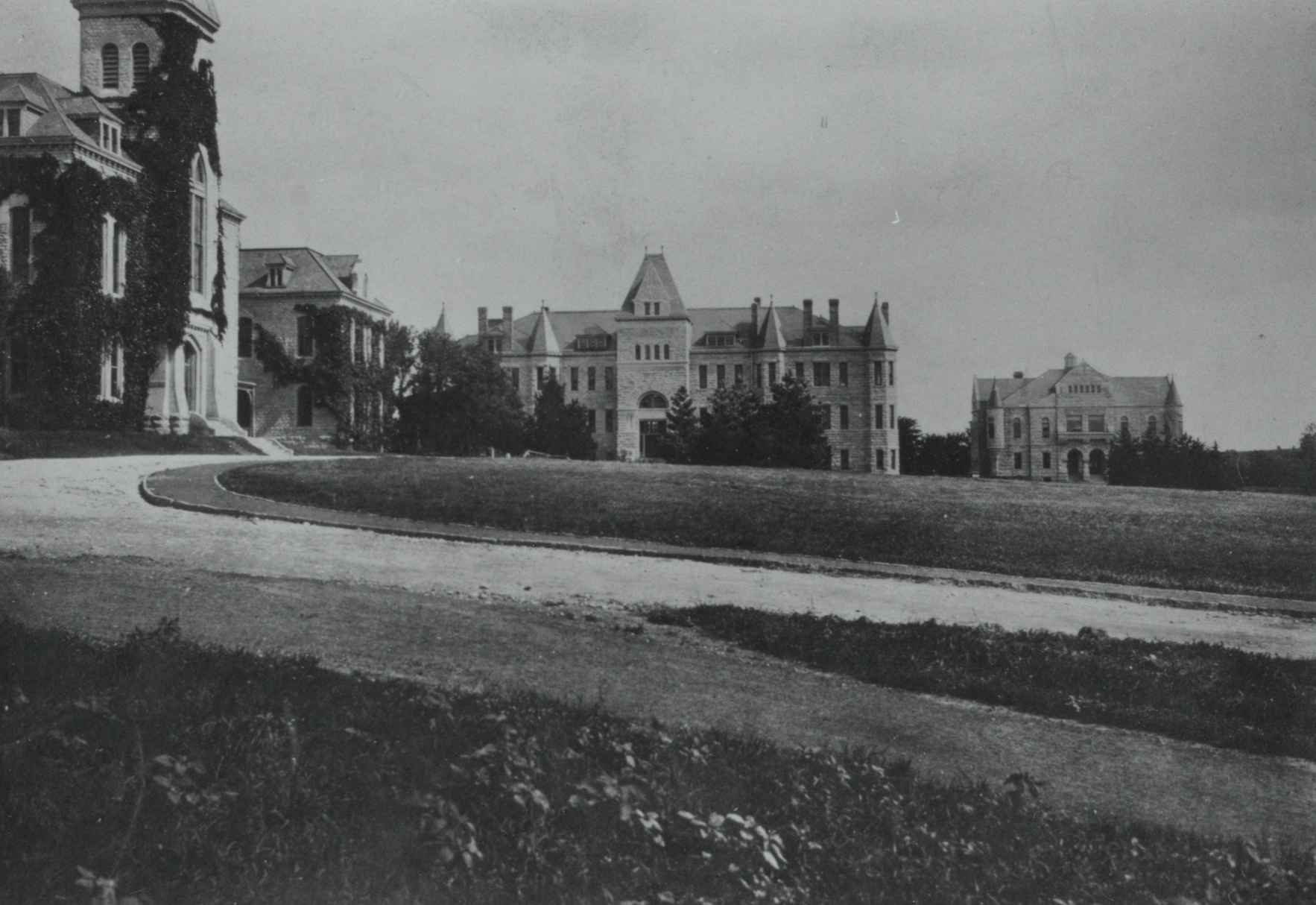
Year Unknown. Anderson Hall (left), Denison Hall (center), and Agricultural Hall (right) (Holton Hall). Looking north. Courtesy of Richard L. D. and Marjorie J. Morse Department of Archives and Special Collections, Kansas State University Libraries.
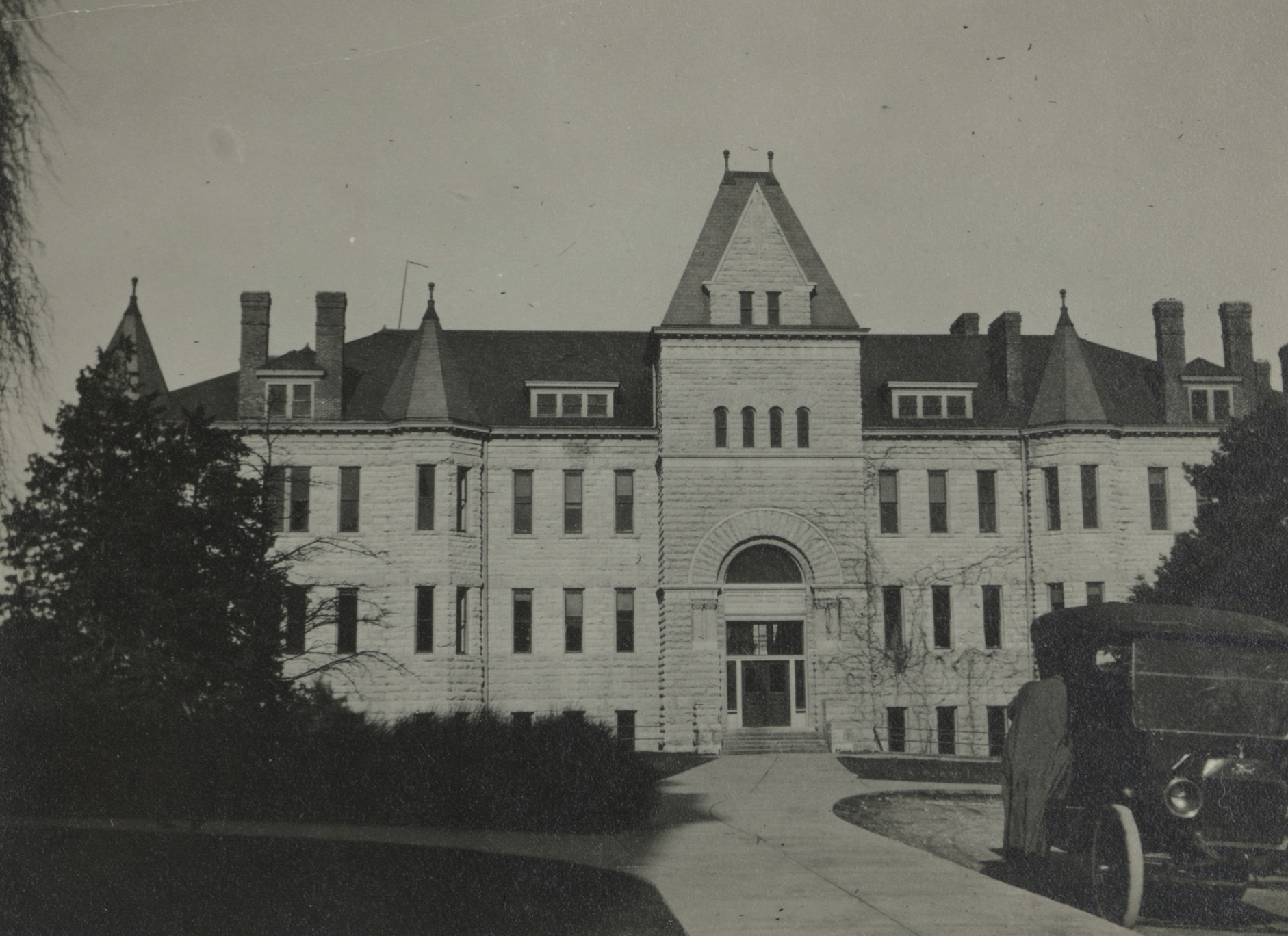
Denison Hall circa 1920s. Looking northwest. Courtesy of Richard L. D. and Marjorie J. Morse Department of Archives and Special Collections, Kansas State University Libraries.
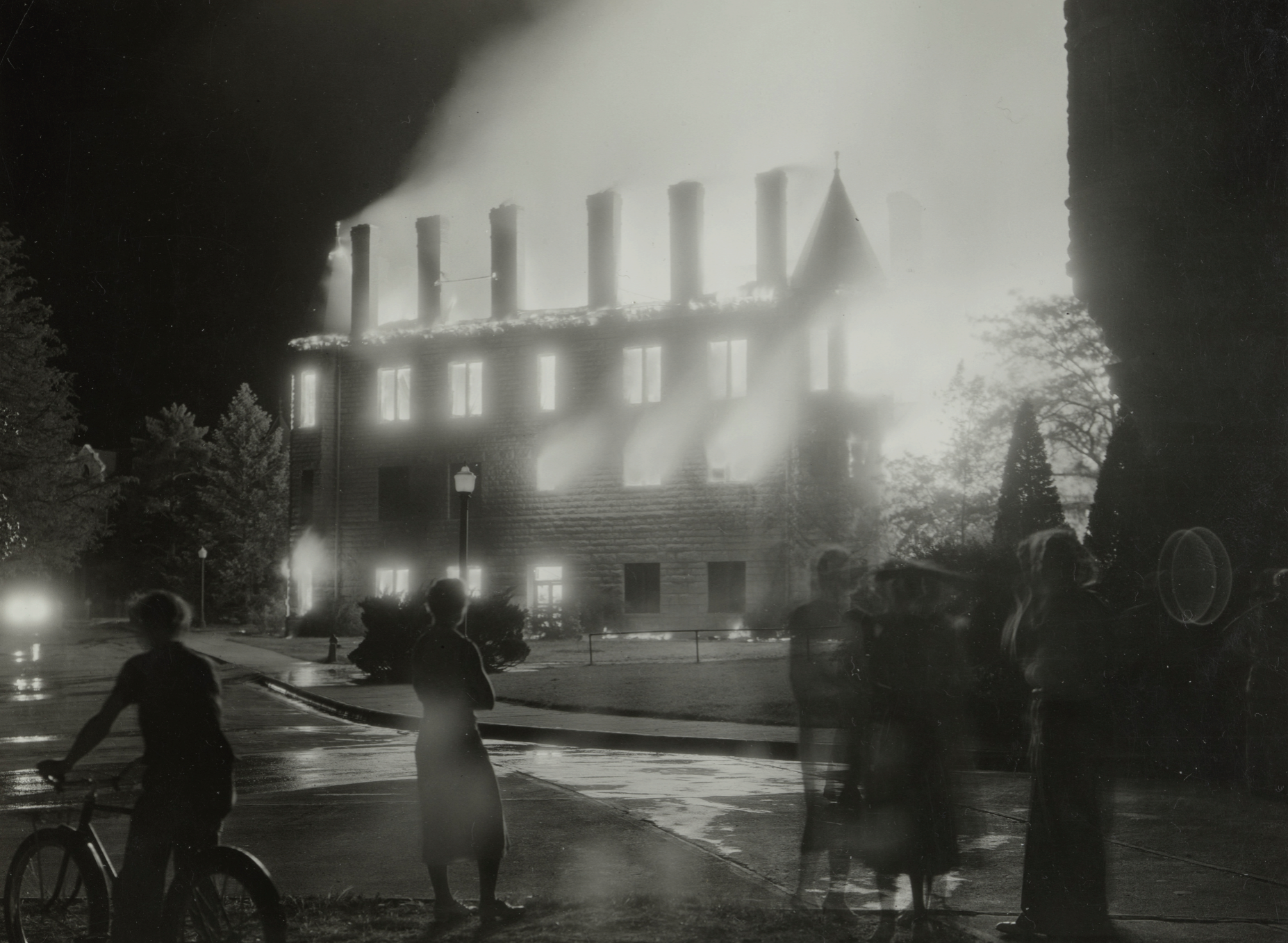
10:35pm - Mr. F. A. Laizure had just arrived back in town and was headed home, which was approximately one mile west of the University, he noticed flames in the distance. It didn’t take long for him to realize, and many others in the community that this was a building on campus, Denison Hall.
~10:36pm - The college whistle and city fire siren began to wail loudly across Manhattan.
~10:50pm - Thousands of people were at the scene, with the Fire Department and roughly several hundred people and college employees aiding in extinguishing the fire. Reportedly, one Manhattan fireman had seen the the fire’s light from the other side of Junction City, approximately 20 miles west, and another man saw the same thing from the easter side of Alma, approximately 27 miles southwest.
Within the 15 minutes it took to notice the fire and people arriving the building was fully engulfed in flames. It is believed that the fire had started hours earlier, apparently have been started in the front of the building, either in the stairwell or a laboratory/storage room. This also had been the sight of two previous fires that had occurred in the building, but not reaching this level of destruction. By the time Laizure had noticed the fire, the building was impossible to save, and was endangering Anderson Hall, Women’s Gymnasium (old chemistry building), and the Agricultural Hall (knows as Holton Hall). The fire had been burning hot, to the point of melting the paint off a door just 100 feet away.
Aug 3, 1934
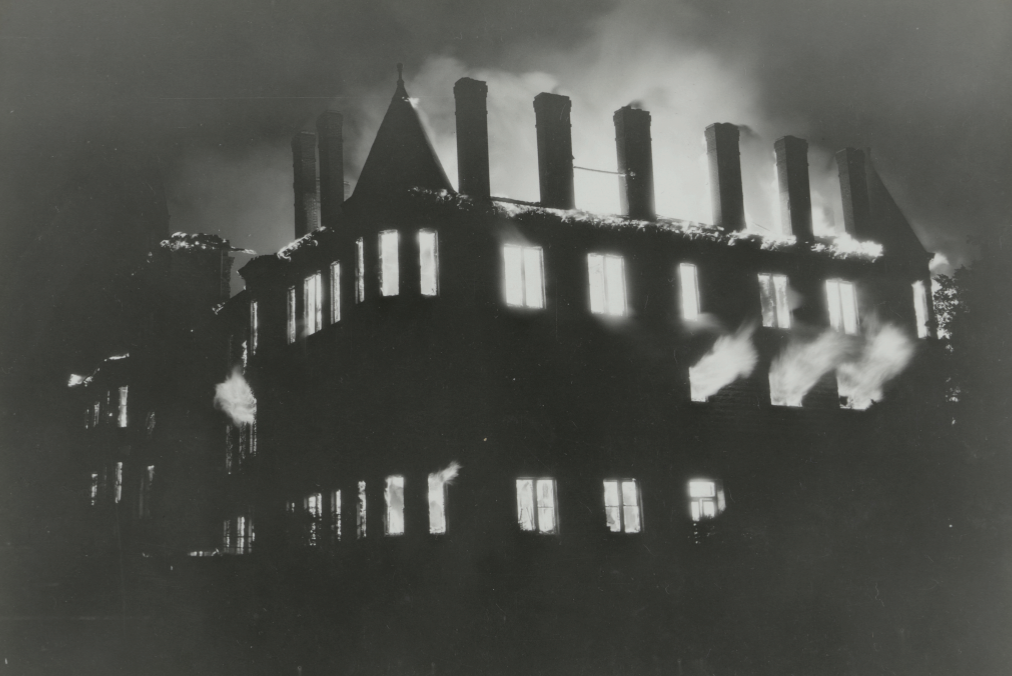
Looking northwest. Main Entrance side.
Looking west. East flank of the building.
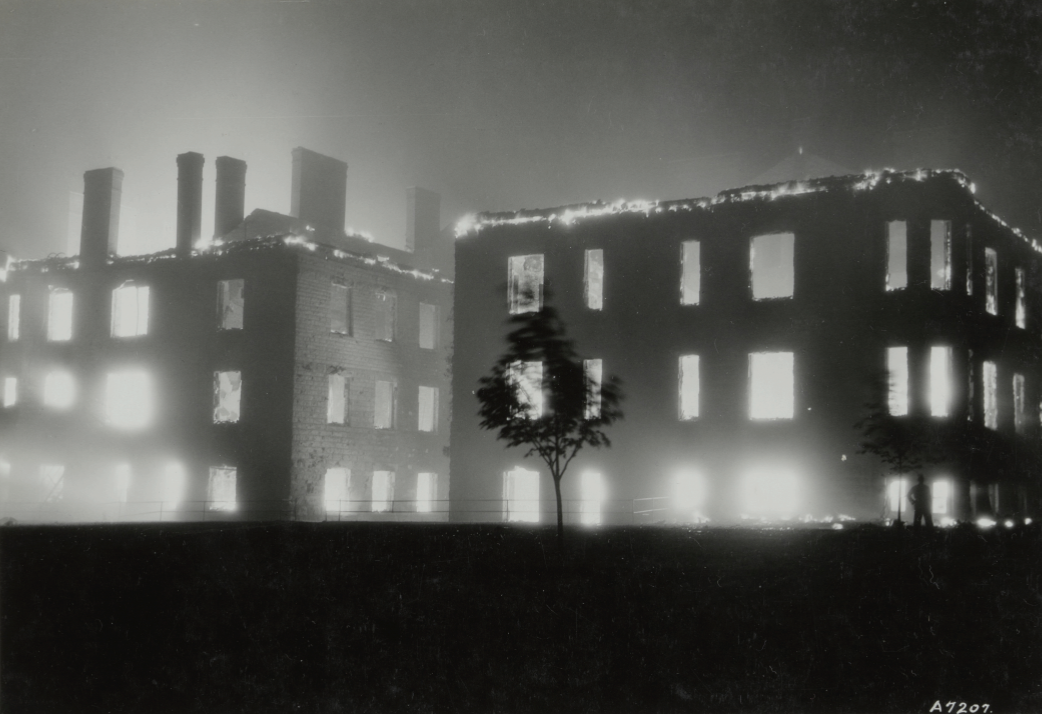
Looking south. Rear wings of the building.
These photos courtesy of Richard L. D. and Marjorie J. Morse Department of Archives and Special Collections, Kansas State University Libraries.
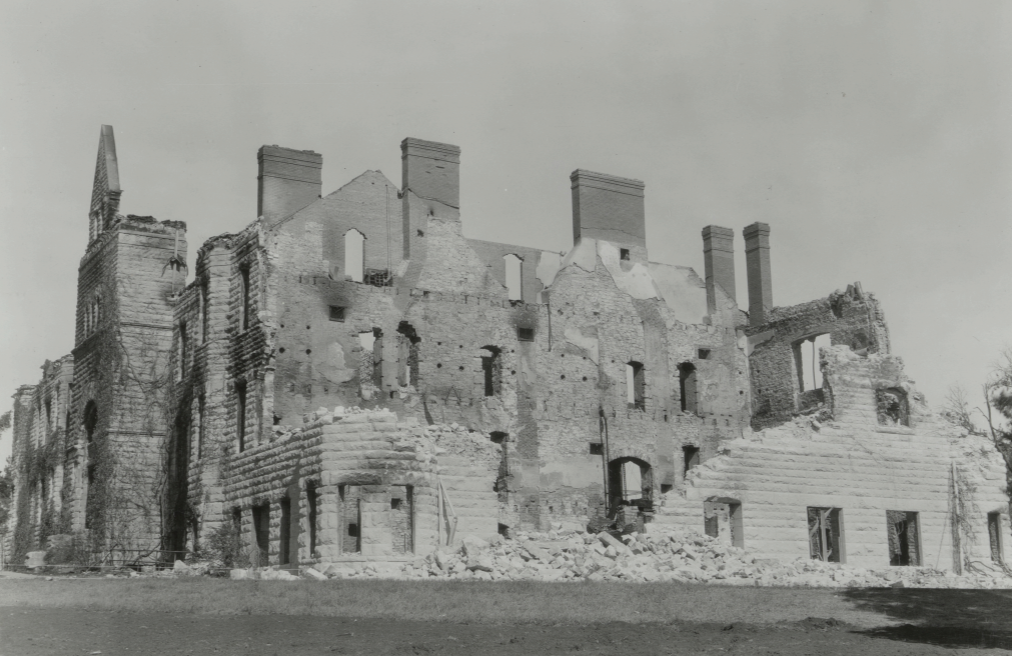
Once the fire was put out, a night-patrol making sure no new fires started, and everything had subsided, Denison Hall now lay in a pile of rubble and ruin. Roughly $200,000 (~$4.8 Million today) of physical property was lost. Much research and data were also lost, 73 years worth of weather records (some of which was recovered with the help of Federal Government) and several long-term experiment data, including a five-year long experiment on paint composition and durability, by Dr. King.
It was revealed later that several hours before the fire started, commencement practice was occurring in the nearby stadium. It was a wonder on how no had noticed or if they were able to notice the flames. Furthermore, with this commencement practice, the campus watchmen were pulled away to work this event, leaving the heart of campus to remain unsupervised. It is unknown that even if this practice didn’t happen and the watchmen were still patrolling, if the building would have been saved. In the end, Denison Hall was gone, having been the largest fire in University history up until this point.
The remaining structure was torn down at a cost of $1,050 in 1934, and similar to the story of the move to Denison Hall from the original building, K-State yet again “scrambled” to gather funds for a new building. In his 1934 Biennial Report, President F. D. Farrell had ask for a whopping $300,000 for a new building. This building would later be built as the new Physical Science building in 1939, and later named Willard Hall.
Aug 4, 1934
Looking northwest. Main Entrance side. Courtesy of Richard L. D. and Marjorie J. Morse Department of Archives and Special Collections, Kansas State University Libraries.
Section One - Preface
Willard, Julius Terrass, History of the Kansas State College of Agriculture and Applied Science (Manhattan, KS: Kansas State College Press, 1940), 44.
Willard, History, 157.
Section Two - 1901-1903
(First three photos) “The New Physical-Science Hall,” The Industrialist, June 17, 1902, 479-481
(Fourth photo) "(Old) Denison Hall," Vertical Files, Richard L. D. and Marjorie J. Morse Department of Archives and Special Collections, Kansas State University Libraries.
(Fifth photo) "(Old) Denison Hall," Vertical Files, Richard L. D. and Marjorie J. Morse Department of Archives and Special Collections, Kansas State University Libraries, Edited with Google Gemini
Willard, History, 157.
“Local Notes,” The Industrialist, April 9, 1901, 329.
“Local Notes,” The Industrialist, October 1, 1901, 24.
“Local Notes,” The Industrialist, October 1, 1901, 26.
“The New Physical-Science Hall,” The Industrialist, June 17, 1902, 477-485.
"Denison Hall,” Willard Card Catalog, Card 10, referencing The Industrialist, November 25, 1902, 141, Richard L. D. and Marjorie J. Morse Department of Archives and Special Collections, Kansas State University Libraries.
Section Three - 1903 - August 2, 1934
(Photos) "(Old) Denison Hall," Vertical Files, Richard L. D. and Marjorie J. Morse Department of Archives and Special Collections, Kansas State University Libraries.
"Denison Hall," Willard Card Catalog, Card 12, referencing Minutes, C, April 18, 1913, 522, Richard L. D. and Marjorie J. Morse Department of Archives and Special Collections, Kansas State University Libraries.
Section Four - August 3, 1934
(Photos) "(Old) Denison Hall,” Vertical Files, Richard L. D. and Marjorie J. Morse Department of Archives and Special Collections, Kansas State University Libraries.
“Fire Destroys Denison Hall at K.S.C.,” The Morning Chronicle, August 4, 1934, 3.
Section Five - August 4, 1934
(Photo) "(Old) Denison Hall,” Vertical Files, Richard L. D. and Marjorie J. Morse Department of Archives and Special Collections, Kansas State University Libraries.
“Fire Destroys Denison Hall at K.S.C.,” The Morning Chronicle, August 4, 1934, 3.
"Denison Hall," Willard Card Catalog, Card 15, referencing The Industrialist, August 15, 1934, Richard L. D. and Marjorie J. Morse Department of Archives and Special Collections, Kansas State University Libraries.
"Denison Hall," Willard Card Catalog, Card 19, referencing The Industrialist, September 19, 1934, Richard L. D. and Marjorie J. Morse Department of Archives and Special Collections, Kansas State University Libraries.
"Denison Hall," Willard Card Catalog, Card 29, referencing The Kansas Board of Regents Minutes, November 13, 1935, 522. Richard L. D. and Marjorie J. Morse Department of Archives and Special Collections, Kansas State University Libraries.
"Denison Hall," Willard Card Catalog, Card 21, referencing The Kansas Board of Regents Minutes, September 29, 1935. Richard L. D. and Marjorie J. Morse Department of Archives and Special Collections, Kansas State University Libraries.
"Denison Hall," Willard Card Catalog, Card 24, referencing The Industrialist, November 14, 1934. Richard L. D. and Marjorie J. Morse Department of Archives and Special Collections, Kansas State University Libraries.